
When a Smaller AI Model Is Enough for the Job
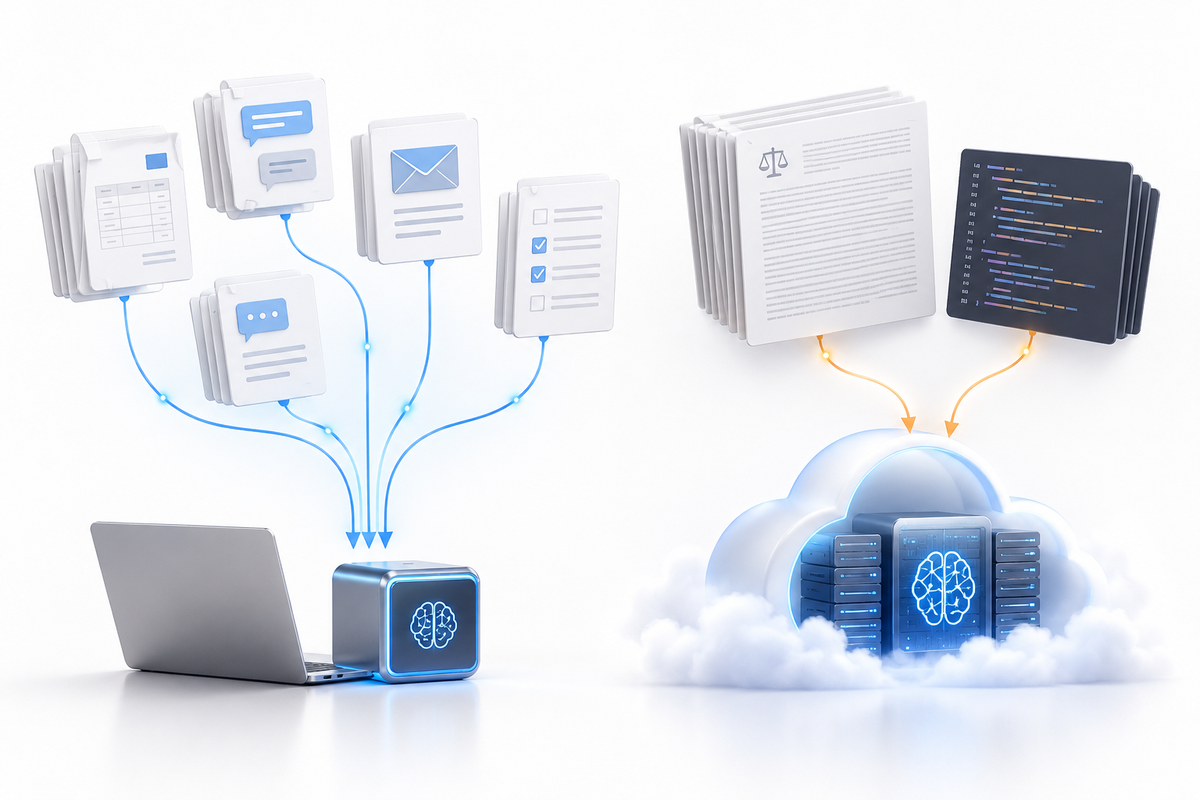
Companies often buy AI by choosing the strongest model available and sending every task to it. Smaller models are making the approach harder to justify. Models with 30 billion parameters or fewer now handle a growing range of business tasks and some run on a laptop or single accelerator. For routine workloads, the performance gap against larger frontier systems has narrowed enough to make cost and deployment location part of the buying decision.
Start with the task, not the model ranking
Extracting an invoice number does not require the same reasoning as reviewing a long legal contract. Classifying a customer request differs from debugging production code. Using one frontier model for every task keeps system design simple, but the company pays frontier-model prices and latency even when a smaller model produces the same operational result. Internal testing answers the procurement question better than a public benchmark.
If two models both achieve the required accuracy on invoice processing, the faster or cheaper one has an advantage. If the smaller model fails on complex contracts, route those documents elsewhere.
Local models change the infrastructure choice
Smaller models can run closer to company systems.
A business can process selected workloads on its own infrastructure rather than sending every request to an external API. Local deployment still requires access controls, patching, monitoring and secure infrastructure. It gives the company more control over where information travels and how the application behaves during vendor outages or capacity limits. Remote frontier models keep an advantage on work involving complex reasoning, long context or difficult edge cases. One model does not need to win both types of work.
Route routine work and escalate the rest
A company can send repetitive, bounded requests to a smaller model and move harder requests to a stronger system. The architecture adds work. Teams need tests, routing rules and escalation thresholds.
The savings become measurable. If 80 percent of requests produce the required result on a smaller model, paying frontier-model prices for all 100 percent buys capability unused on most transactions.
For procurement teams, compare cost per successfully completed task, not model price per token alone. The strongest model belongs where stronger reasoning changes the result.